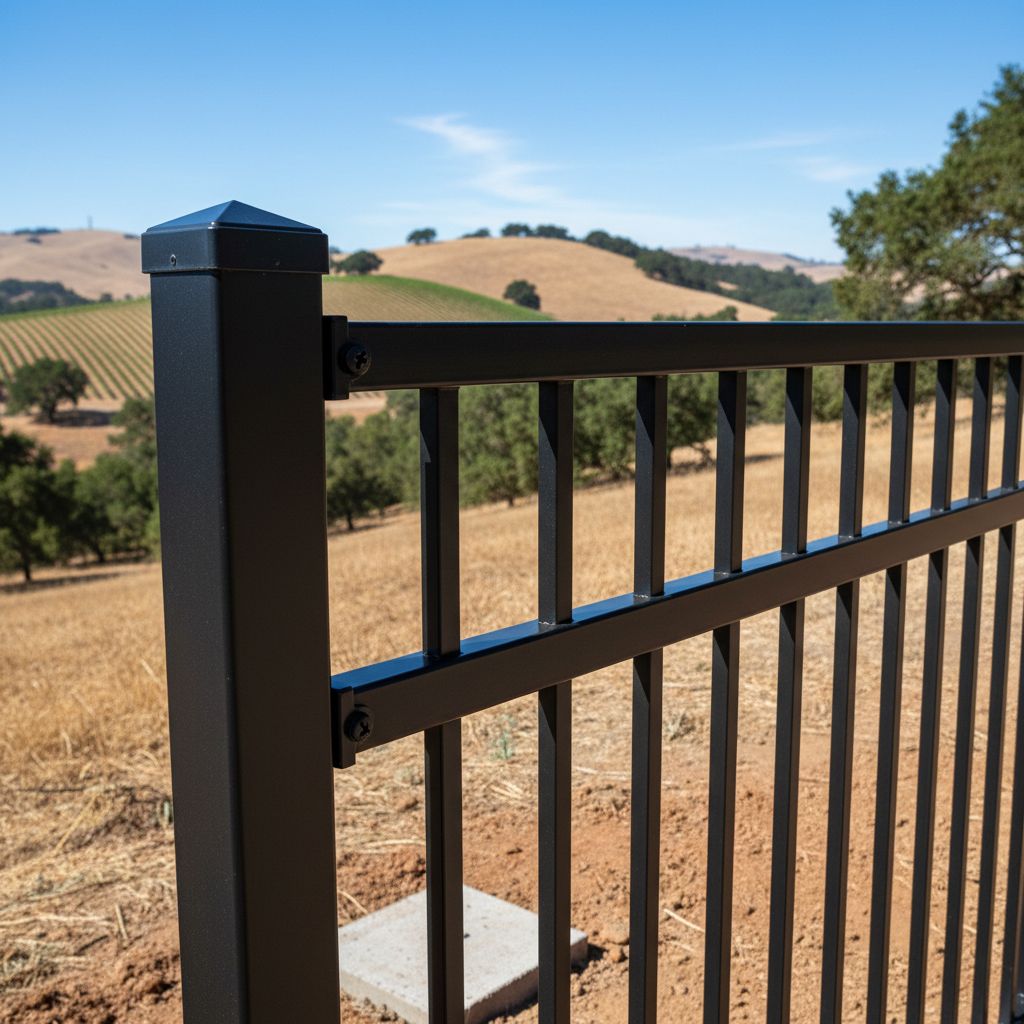
Is aluminum fencing really strong enough for Napa's weather?
You bet it is. I get this question a lot, especially from folks who've seen older, flimsier fences. But modern aluminum fencing, the kind we install at Omega Fence Co, is built tough. It’s not going to rust like steel or rot like wood, and it stands up to our Napa weather cycles really well. Think about it: we get those hot, dry summers that can bake and crack wood, then we get our wet winters. Aluminum doesn't expand and contract as much as other materials, and it doesn't absorb moisture. So, you won't see it warping, cracking, or getting eaten by termites. It's powder-coated too, which adds another layer of protection against UV rays and general wear and tear. I've put these fences up all over, from the sun-drenched hills of Silverado Trail to the wetter, shadier spots down by the river, and they hold up beautifully.
How much does an aluminum fence cost compared to wood or vinyl?
This is usually the first thing people ask, and it's a fair question. Upfront, aluminum can sometimes be a bit more than a basic pressure-treated wood fence. But here's where you need to look at the long game. Wood needs regular maintenance – staining, sealing, maybe replacing boards that rot or warp. Vinyl also has its own issues; it can get brittle over time, especially with our strong sun, and it's not always easy to repair if a panel gets damaged. Aluminum? It's practically maintenance-free. You might hose it down once in a while to keep it clean, but that's about it. So, while the initial investment might be a little higher, you save a ton of money and time over the years because you're not constantly fixing or replacing it. When you factor in the lifespan and zero upkeep, aluminum often comes out cheaper in the long run.
Can I really install an aluminum fence myself, or do I need a pro?
Look, I'm a professional installer, so my first answer is always going to be to hire someone who knows what they're doing. But I'm also honest. If you're handy, have the right tools, and you're good with following instructions, you *can* install some types of aluminum fencing yourself. The panels are usually pre-assembled, and they often come with a snap-together or screw-together system. The biggest challenge for DIYers is usually getting the posts perfectly plumb and spaced correctly, especially on uneven terrain. And in Napa, we've got plenty of rolling hills and slopes, which can make things tricky. If your property has a lot of grade changes or you're not confident with digging precise post holes and setting them in concrete, you're probably better off calling in a pro. We've got the specialized tools and experience to make sure it's done right, looks good, and lasts.
What about privacy? Aluminum fences seem pretty open.
You're right, most traditional aluminum fences are designed for security and aesthetics, with pickets spaced to allow visibility. They're great for keeping pets and kids in, or for defining property lines without blocking views. But if privacy is a big concern, you've still got options with aluminum. Some manufacturers offer styles with closer picket spacing, or even decorative panels that can be inserted between posts to create more of a screen. Another popular solution I've seen is combining aluminum posts and rails with privacy inserts made of composite or even bamboo. You get the strength and low maintenance of aluminum for the structure, plus the privacy you need. It's all about finding the right design for your specific needs.
Do aluminum fences work on sloped or uneven yards?
Absolutely, and this is one of aluminum's big advantages over other materials. Unlike rigid wood or vinyl panels that often require stepping (creating gaps underneath), aluminum fence panels are designed to