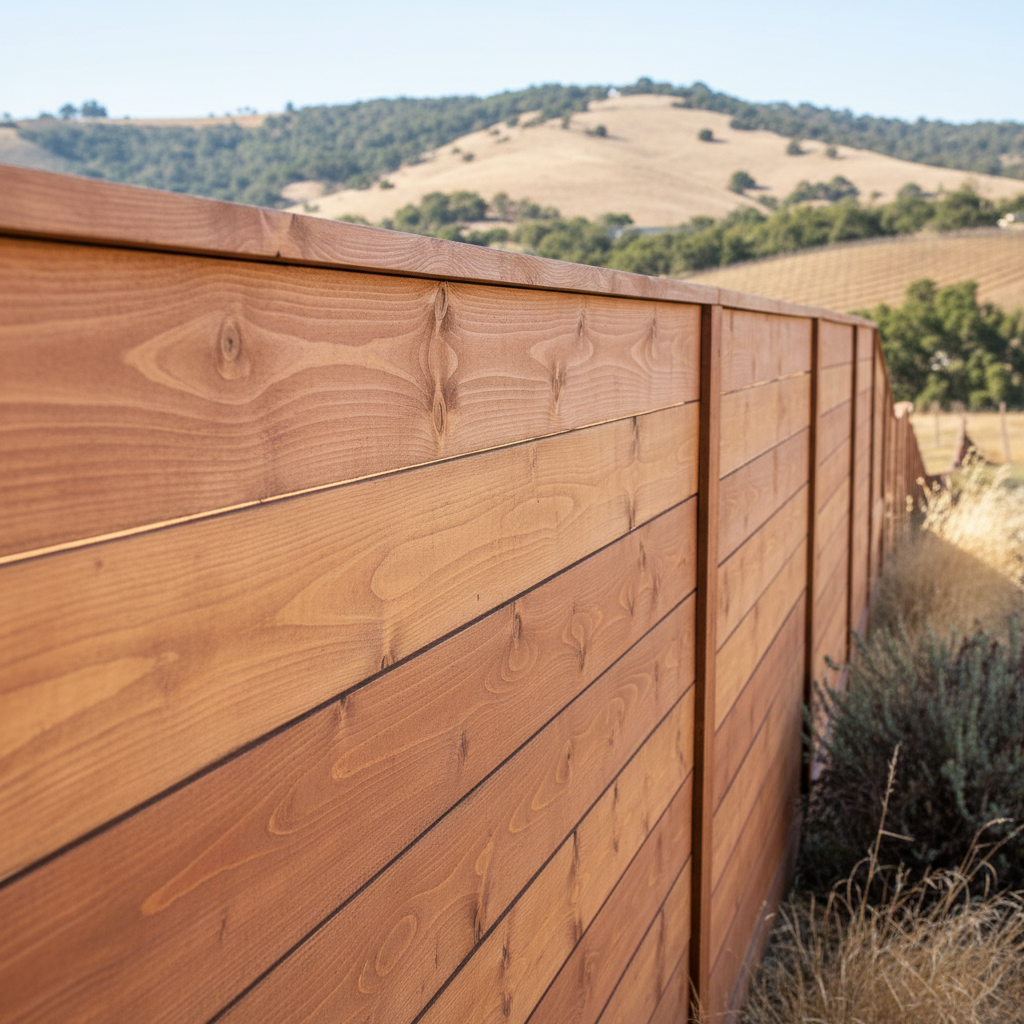
Your fence is more than just a boundary around your property. It is a big part of how your home looks from the street. It also protects your yard from the weather. Here in Napa, our fences take a beating. We get those long, hot, dry summers that bake the wood. Then we have damp winters that can bring mildew and rot. That is why keeping your wooden fence stained or painted is important. It is not just about looking good. It is about protecting your investment in your property.
Our team at Omega Fence Co has seen many fences over the years. We can tell you that a little preventative maintenance goes a long way. This guide will walk you through what you need to know before, during, and after staining or painting your fence in Napa. We will help you decide what you can tackle yourself as well as when it is smart to bring in a professional for your fence project.
Stain or Paint? Let us Break It Down
This is the first big decision you will face for your fence. Honestly, there is no single right answer. It really depends on the look you want for your property. It also depends on how much upkeep you are willing to do. Both options protect your fence from moisture as well as UV rays as well as general wear and tear.
Staining Your Fence
Stain soaks into the wood fibers. It makes the natural grain and texture look better. Stain is great if you like the look of natural wood. It helps preserve that aesthetic. You have options from clear toners that just protect the wood. You also have semi-transparent stains that add color while still letting the grain show through. Then there are solid stains that give a more opaque, paint-like finish. These solid stains still penetrate the wood.
- Pros: Stain does not peel or crack like paint. This makes reapplication easier. It fades over time, so you usually do not need to scrape anything off before reapplying. It is generally less work for prep work.
- Cons: Stain generally needs reapplication more often than paint. This is typically every 2-5 years depending on the type of stain as well as the Napa weather. Transparent stains offer less UV protection. These might need more frequent touch-ups.
For our Napa climate, oil-based penetrating stains are often a good choice. They expand and contract with the wood. This helps prevent cracking. They also offer superior moisture resistance for your fence.
Painting Your Fence
Paint forms a solid layer on top of the wood. It gives you a uniform color. Paint also hides any imperfections or mismatched boards. If you want a specific color to match your home, paint is your best bet. Paint also works well if you just want a clean, crisp look for your fence.
- Pros: Paint offers a wide range of colors as well as finishes. It provides a strong barrier against moisture as well as UV rays. Paint can last longer per application than stain. This is often 5-10 years if done right.
- Cons: Paint can crack, chip, and peel over time. This is especially true with our temperature swings here in Napa. When paint fails, it means more intensive prep work. This includes scraping as well as sanding before repainting. Paint is generally more expensive upfront because you usually need primer.
For paint, premium latex or acrylic latex exterior paints are usually recommended for wood fences. They are durable. They resist peeling. They can also handle our Napa weather conditions well.
Before You Start: The Prep Work (Do Not Skip This!)
Good preparation is important for a long-lasting finish. This is true whether you are staining or painting your fence. Seriously, this is where most DIY projects go sideways. A premium product on a poorly prepped surface will fail fast. Our team always stresses proper preparation for any fence project.
Timing is Everything
Do not rush your fence project. If you have a brand new fence, you need to let the wood dry out. For pressure-treated wood, that is typically 4-6 weeks. Redwood and cedar might be ready in a few days to a few weeks. The wood needs to be dry enough to absorb the stain. It also needs to allow the paint to adhere properly.
The weather also matters for your fence project. Pick a day when temperatures are between 50 and 90 degrees Fahrenheit. There should be low to moderate humidity. There should also be no rain in the forecast for at least 24-48 hours after you finish. Our spring and fall seasons here in Napa are often ideal for this kind of work. This avoids the intense summer heat that can make products dry too fast.
Clean That Fence!
You cannot put new stain or paint over dirt. You also cannot put it over mildew. You cannot put it over loose old finishes either.
- Power Washing: This is usually the fastest and most effective way to clean a fence. Use a low-pressure setting. Also use a wide fan tip to avoid damaging the wood. You are trying to clean the fence, not strip the wood. You might need a wood cleaner or mildew remover for stubborn spots.
- Scraping & Sanding: If you are painting over an old, peeling paint job, you will need to scrape off all the loose paint. Sanding will help smooth out rough spots. It also helps make sure paint adheres better. This is especially important if you are painting.
- Let it Dry: After cleaning, let the fence dry completely. This can take a couple of days. It depends on the humidity. You can do a simple water test. Sprinkle some water on the wood. If it beads up, it is still too wet. If it soaks in, you are good to go.
During the Project: Application Tips
Once your fence is clean and dry, it is time for the fun part. Always read the manufacturer's instructions for your specific product. They know their stuff about their products.
Tools You Will Need
- Brushes: Good quality brushes are important for cutting in edges. They also help get into tight spots.
- Rollers: Rollers are faster for flat, open sections. Use a roller cover that is right for rough surfaces.
- Paint Sprayer: This is the fastest way to cover a large fence. However, it takes practice to avoid drips as well as uneven coverage. If you spray, always back-brush or back-roll. This makes sure the product gets into the wood grain.
- Drop Cloths/Tarps: Protect your plants. Also protect your patio. Protect anything else you do not want stained or painted.
Application Techniques
- Work in Sections: Do not try to do too much at once. Work on a few boards or a small section at a time. This helps maintain a wet edge. It also helps avoid lap marks.
- Even Coats: Apply thin, even coats of stain or paint. Two thin coats are always better than one thick one.
- Follow the Grain: For stain, apply along the wood grain. This helps it penetrate evenly into the wood.
- Primer (for Paint): If you are painting, a good exterior primer is usually a must. This is especially true for raw wood. It is also important if you are changing colors drastically.
After the Project: Maintenance & When to Call a Pro
You have put in the work on your fence. Now you need to make it last.
Ongoing Maintenance
- Regular Cleaning: A quick wash with a hose once a year can remove dirt. It can also remove mildew that can break down your finish faster.
- Inspect Regularly: Keep an eye out for any signs of wear. This includes fading as well as chipping as well as peeling. Catching small issues early can save you a lot of work later.
- Touch-Ups: Do not wait for the whole fence to look bad. Spot-treat any areas that are wearing down.
When to Call Omega Fence Co
Staining or painting a fence is a DIY-friendly project for many people. However, there are times when calling in the professionals just makes sense. Our team at Omega Fence Co can help with your fence project in Napa.
- Large or Complex Fences: If you have a really long fence, it can be a huge time commitment. Fences with intricate details also take a lot of time. We have the equipment as well as the crew to get it done efficiently as well as evenly.
- Significant Damage: If your fence has a lot of rotten boards, it needs repair before any finish goes on. Loose pickets or structural issues also need repair. We can handle those repairs properly for you.
- Lead Paint Concerns: If your fence was painted before 1978, there is a chance of lead-based paint. This requires special handling. Lead abatement procedures are also needed. You absolutely should not DIY this.
- Time is Money: Your weekend is valuable. If you would rather spend it enjoying Napa Valley than wrestling with a paint sprayer, that is what we are here for. Our team can usually complete a standard project in 2-4 days.
- Guaranteed Results: A professional job means consistent coverage. It also means proper product selection for our local Napa climate. It also means a cleaner worksite. You will get a finish that lasts as well as looks great.
Ultimately, protecting your fence is important. This is true whether you DIY or hire us. Our local Napa weather is tough on wood. This includes the summer sun beating down on the Silverado Trail. It also includes the winter rains rolling in from the Mayacamas Mountains. A good stain or paint job acts like a raincoat as well as sunscreen for your fence. It extends your fence's life. It also keeps your property looking sharp.