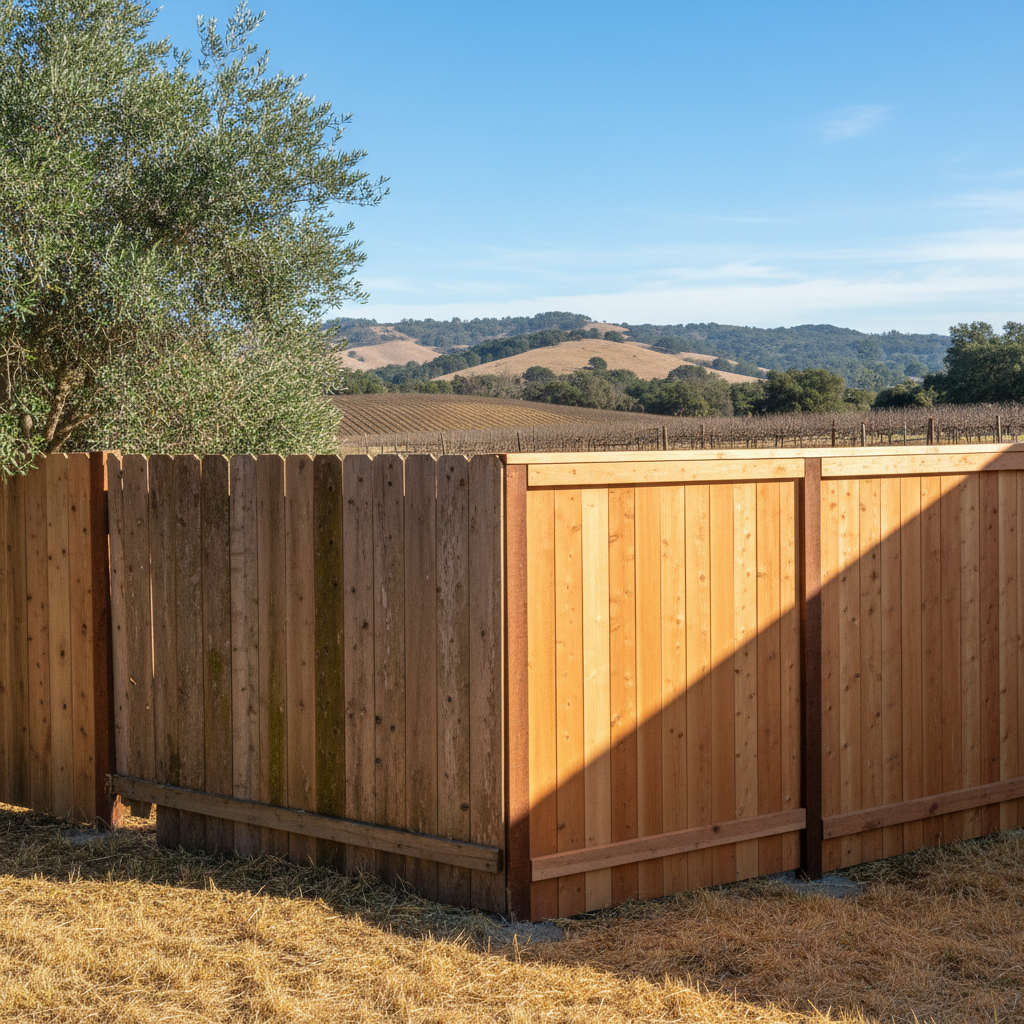
Alright, let's talk privacy fences. You want that backyard oasis, right? A place where you can kick back without feeling like you're on display. When you're planning that solid barrier, one of the biggest decisions you'll make, even if you don't realize it yet, is how those fence posts are actually going to get anchored. It's not just about the fence material; it's about the foundation.
Here at Omega Fence Co., we see a lot of different setups. Generally, for a solid privacy fence, you're looking at two main ways to get those posts in: directly in the ground with concrete, or anchored to an existing concrete slab or footing with a bracket. Both have their place, but they're definitely not created equal for every situation, especially with our Napa Valley soil and climate.
Post-in-Ground with Concrete: The Traditional Workhorse
This is probably what most people picture when they think about setting a fence post. We dig a hole, drop the post in, and fill it with concrete. Simple, right? Well, there's a bit more to it, but that's the basic idea.
- Cost: Generally, this method is more budget-friendly upfront. You're paying for the digging, the concrete, and the labor to set each post. There aren't any fancy metal brackets or specialized anchors to buy.
- Durability: When done right, this is a super solid installation. You've got a deep, heavy concrete footing holding that post firmly in place. It stands up to our occasional strong winds coming off the Bay or down the valley pretty well. The big 'but' here is rot. Even pressure-treated wood posts, over time, can succumb to moisture and soil contact, especially in our damp winter months. We've seen posts rot out at the ground line in as little as 10-15 years if drainage isn't perfect or the treatment wasn't top-notch.
- Maintenance: Not much direct maintenance on the post footing itself. Your main concern is keeping an eye out for rot at the base of the post where it meets the soil. Good drainage around the post helps a lot.
- Appearance: You don't see the footing, which is nice and clean. The fence just rises directly from the ground.
- Typical CA Conditions: This is the go-to for most residential fences around here. It's robust and handles our clay soils well, provided the holes are dug to the right depth and width. Just be mindful of that rot potential.
Post-on-Bracket (or Post-on-Slab): The Modern Solution
This method involves anchoring a fence post to an existing concrete surface, like a patio, driveway, or a dedicated concrete footing, using a metal post base or bracket. The post itself never touches the soil.
- Cost: Usually a bit more expensive initially. Those galvanized or powder-coated steel brackets aren't cheap, and the labor to precisely drill and anchor them can add up. If you don't have an existing slab, you'll also need to pour concrete footings specifically for the posts, which is an added cost.
- Durability: This is where post-on-bracket shines. By keeping the wood post completely off the ground, you virtually eliminate the risk of rot from soil contact. This significantly extends the life of your fence posts, often by decades. It's incredibly durable against rot, which is a huge win in our climate. The connection to the concrete is strong, too, resisting uplift and lateral forces.
- Maintenance: Very low maintenance for the post base itself. You might want to check the anchor bolts periodically, but generally, once it's in, it's good. Your posts will last much longer, meaning less fuss down the road.
- Appearance: The metal brackets are visible at the base of the posts. Some people like the industrial look; others prefer the cleaner look of posts directly in the ground. There are different styles of brackets, some more decorative than others.
- Typical CA Conditions: Excellent for our conditions! Eliminating ground contact is a huge advantage against rot. If you're building a fence on an existing concrete patio or around a pool deck, this is often the only practical way to go without tearing up concrete. It's also a great option for new builds where you can pour specific footings that elevate the posts.
So, Which One Should You Choose for Your Napa Home?
Look, if you're on a tight budget and you're okay with the understanding that your fence posts might need replacing at the ground line in 15-20 years, then the traditional post-in-ground method is a perfectly valid choice. It's what we've done for generations, and it works. We do a lot of these, especially in areas like Browns Valley or Silverado Trail where yards are often just dirt or grass.
However, if you want the absolute longest lifespan for your fence posts, and you want to minimize future maintenance headaches, I'd lean towards the post-on-bracket method, especially if you're already pouring concrete for other elements or have existing concrete. The upfront cost is a bit more, but the longevity and peace of mind you get from avoiding rot are, in my opinion, worth it. It's an investment that pays off over the decades.
Ultimately, it comes down to your priorities: initial cost versus long-term durability and maintenance. Both methods can give you a beautiful, sturdy privacy fence. Just make sure you're making an informed decision about what's literally holding it all up. Give us a call at Omega Fence Co. if you want to talk specifics for your property; we're always happy to walk you through the options.