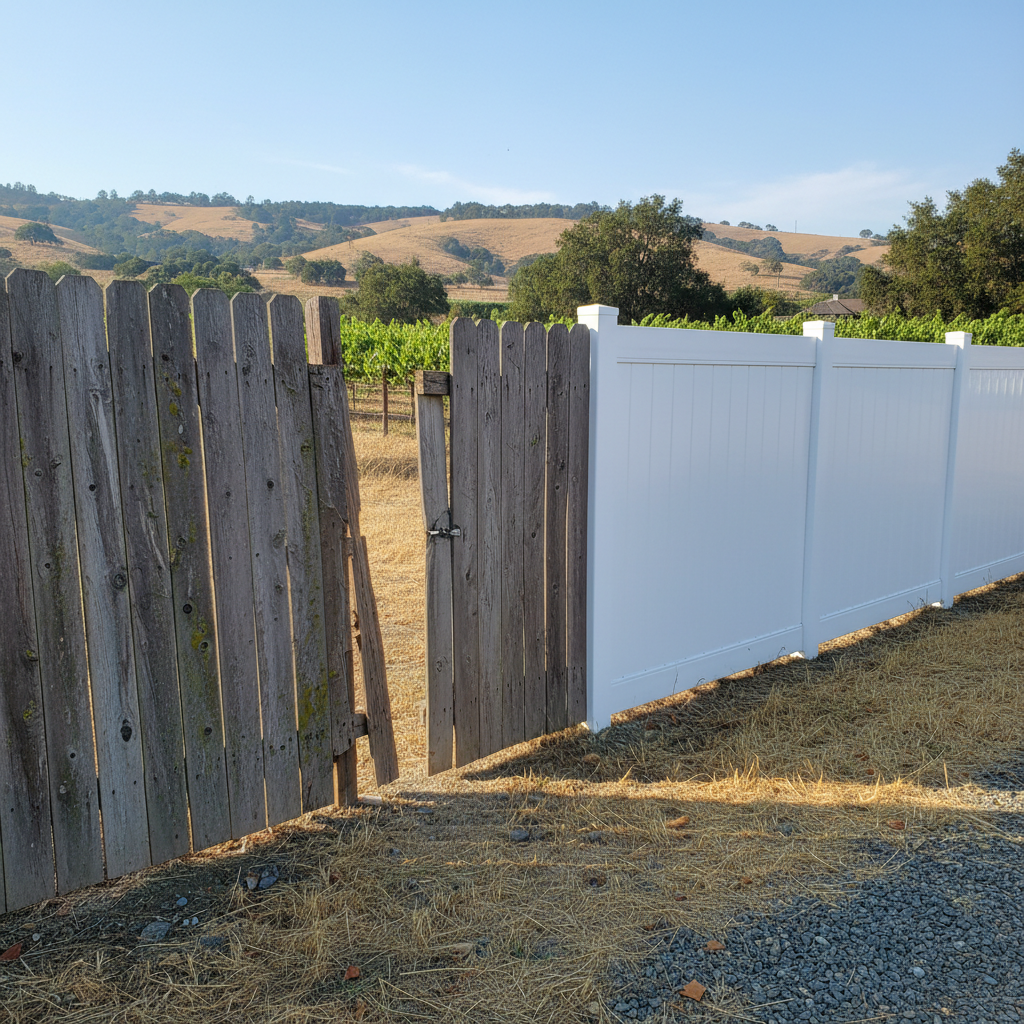
So, you've decided on a vinyl fence. Smart move. They really do look sharp, hardly need any upkeep, and honestly, they hold up great in our Napa climate. But once you start digging into the details, you'll find there's more than one way to set those posts. Most folks immediately think 'concrete,' and yeah, that's usually the right answer. Still, some homeowners, or even a few contractors, might bring up gravel backfill as an alternative. It's worth looking at both options fairly, especially considering what we deal with here in the Valley.
Concrete Post Setting: The Tried and True
This is the gold standard for a good reason. When we at Omega Fence Co put in a vinyl fence, 99% of the time, we're setting those posts in concrete. Here's why:
- Super Stable: Concrete makes for a solid, unmoving base. Once it sets, that post isn't going anywhere. This is really important for vinyl fences because they're usually lighter than wood or iron, and a strong base keeps them perfectly straight and true, especially when those gusty winds roll through the Carneros region.
- Built to Last: Concrete protects the post from shifting soil and stands up great against uplift and side-to-side forces. It's made to last, just like the fence itself.
- Keeps Pests Away: Vinyl itself isn't exactly a buffet for critters, but a concrete collar around the post base helps stop burrowing pests from getting too comfortable near your fence line.
- Follows the Rules: Most local building codes, including right here in Napa County, call for concrete footings for fence posts. This is especially true for taller fences or those in windy spots. It's simply the accepted, proven way to do it.
The downside? It takes more work and costs a bit more upfront because of the materials and installation time. But really, you're paying for a fence that stays put for decades.
Gravel Backfill: The Other Option
Some people push for gravel backfill, and it does have a few theoretical upsides, mostly about drainage and how easy it is to replace things. Here's the scoop:
- Drains Well: The main argument for gravel is that it drains better. The idea is water won't just sit around the post, which could theoretically prevent rot (though this isn't much of a worry with vinyl, since it doesn't rot). In theory, this might be good for areas with really bad drainage. But honestly, our soils here in Napa, even if they're a bit clay-heavy, usually drain well enough that this isn't a huge concern for vinyl posts.
- Easier to Replace: If a post ever gets damaged (say, someone backs a car into it), it's definitely simpler to dig out gravel than to chip away concrete. You just scoop out the gravel, pull the post, and drop in a new one.
- Might Save Money (Sometimes): Gravel itself can be cheaper than concrete, and putting it in might be a little quicker since there's no mixing or waiting for it to cure.
However, I've got to be straight with you about the drawbacks, especially when we're talking about a vinyl fence:
- Less Stability: This is the big one, isn't it? Gravel, no matter how well you pack it down, just doesn't offer the same stiffness as concrete. Your fence posts are more likely to shift, lean, or loosen over time. This means your fence might not look as straight, or it could get wobbly, particularly if you've got a gate attached to one of those posts.
- Hard to Compact: Getting gravel properly compacted around a post is tougher than it sounds, and if it's not done perfectly, you'll end up with settlement and movement.
- Not for Gates: Forget about using gravel backfill for gate posts. The constant stress of opening and closing a gate demands the absolute strongest foundation, and gravel just won't cut it. You'll have sagging gates and alignment problems in no time flat.
- Limited Protection: While vinyl won't rot, the post's stability is super important. Gravel doesn't offer the same side-to-side support against ground movement or outside forces.
My Recommendation for Napa Homeowners
For vinyl fence posts in Napa, hands down, you should go with concrete. It's simply the better choice for stability, how long it lasts, and overall performance. While gravel might seem appealing because of its drainage or how easy it is to replace, those benefits are mostly outweighed by the reduced stability. This is especially true for a material like vinyl that really needs a rigid structure to look its best and work properly.
You're putting money into a beautiful, low-maintenance fence that's going to stand for years. Don't skimp on the foundation. A properly installed concrete footing makes sure your vinyl fence stays straight, strong, and beautiful, resisting our local winds and keeping its clean lines. It's what we recommend and what we do at Omega Fence Co because we know it's the right way to build a fence that lasts.